Latest
How to be assertive without being bossy
Peak Performers newsletter

Tiffany Uman
·
Jan 19, 2026
If you’ve ever held back your true opinion in a meeting for fear of being labeled as difficult, or softened your emails to avoid sounding too demanding, you know the exhaustion of the likability trap.
For many women, the line between being a respected leader and being called bossy or aggressive often feels razor-thin, am I right?
It’s also a frustrating double standard where the same behaviors that get your male colleagues praised as decisive or natural leaders can get you sidelined as "not a team player".
According to research by Fortune, 76% of high-performing women received personality feedback (being told to be less abrasive), while only 2% of men received similar critiques in performance reviews.
This fear of the bossy label also does more than just hurt your feelings. It slows your growth. When you hesitate to speak with authority, your leaders often mistake your caution for a lack of strategic point of view.
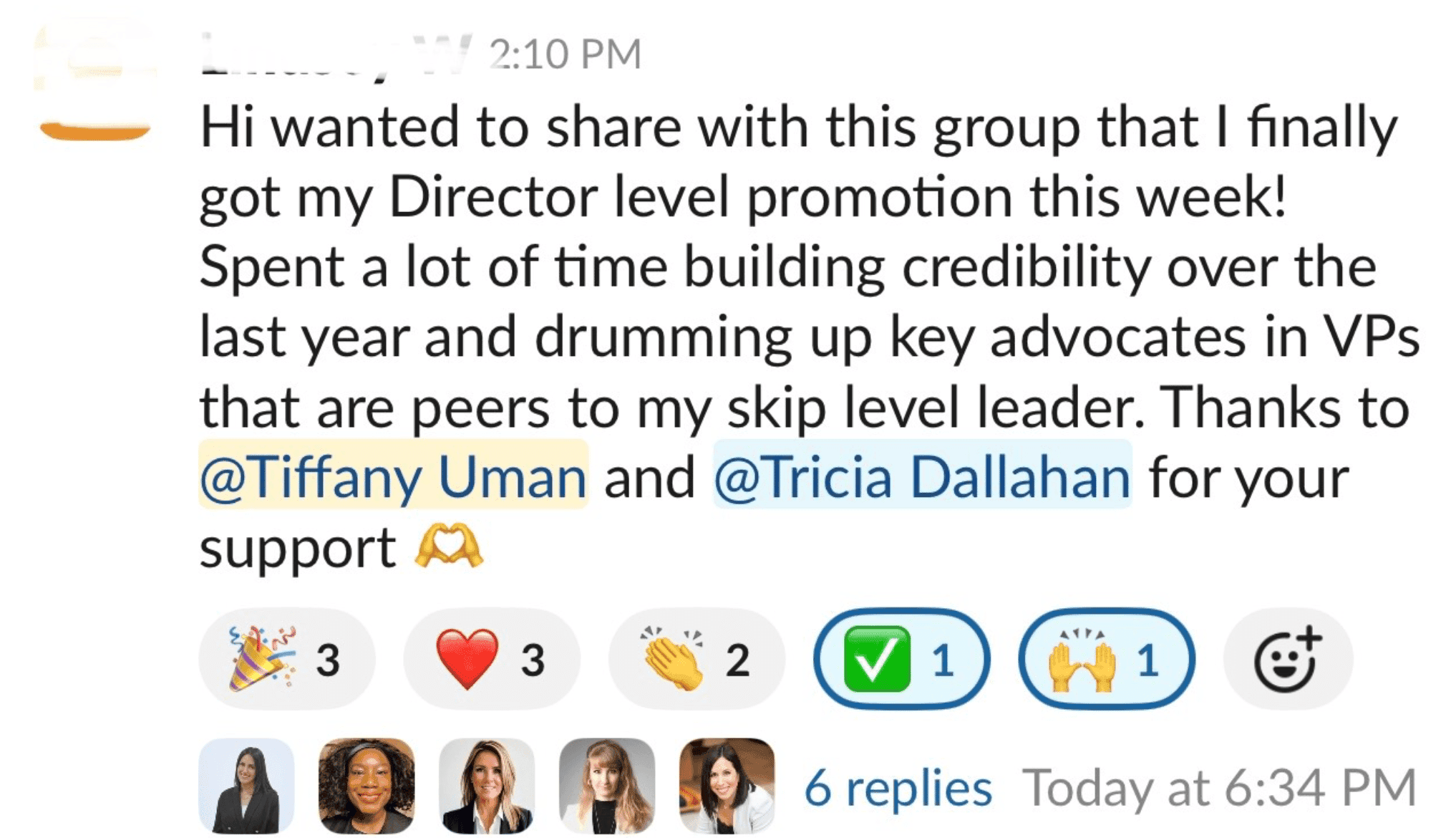
This was a key area I supported my client on recently. She was tired of being talked over and felt her influence was fading, especially amidst an internal reorg. By owning her voice assertively, she stopped asking for permission to lead and secured her Director promotion within a few weeks of working together.
Here’s how to own your power without losing your authenticity.
3 ways to be assertive without being "bossy"
1. Lead with the headline, not the backstory
We often over-explain because we want to justify why we’re taking up space. Wrong approach.
In most leadership circles, long preambles and wordiness can be perceived as uncertainty. Senior leaders want your conclusion first so they can process your recommendation immediately, not the other way around.
Think of it like this. Your headline is the bridge between your expertise and their attention. Keep in mind what's in it for them so they have a vested interest in what you share next. Here's a few quick examples.
When proposing a strategy pivot:
Instead of: "I’ve been looking at the data and thinking maybe we could..."
Start with the result: "I recommend we automate our reporting starting next month."
Follow it up with the impact: "I've estimated that this will save the team 10 hours a week and let us focus on first semester revenue targets best. Happy to walk through next steps on this."
When you hit a roadblock:
Instead of: "So, we had some vendor delays and a few people were out sick..."
Try: "We need to move the launch to [X date] to ensure full quality testing is complete."
Then, show you've got it under control with: "I’ve already mapped out an expedited schedule to keep us on track and can go through that with you now."
When you need resources:
Instead of: "The team is feeling really stretched and I was looking at the budget..."
Lead with authority: "I'm requesting a dedicated intern for Q1 to maintain our delivery speed. By bringing on this added support, it will allow me to focus on strategic priorities [A, B and C] which I know are critical for our divisional goals this quarter."
This respects everyone's time and signals that you’ve already done the strategic thinking. In doing so, you’re offering a solution that makes their lives easier. Win-win.
[Check out my free LinkedIn Learning nano-course How to Advocate for Yourself in Your Career]
2. Stop asking for permission to have an opinion
Too many women have been conditioned to use weaker words or modifiers like "just," "sorry," or "does that make sense?" to soften the message and avoid looking aggressive.
The problem is that these words directly diminish your credibility. Permission language like this signals that you aren't quite ready to own the outcome, instilling doubt in the eyes of decision-makers.
So, trade softening language for conviction closers that build your assertiveness and respect.
Instead of: "I just think maybe we should..."
Use: "I propose [X] as our next step."
Instead of asking: "Does that make sense?"
Use: "Would you like me to clarify anything further or we're good to move ahead?"
Instead of: "I’m not sure if this matters, but..."
Use: "One insight that will help us decide faster is [X]. Here's how this impacts our strategy."
Conviction isn't about being the loudest voice in the room, contrary to what many believe. It’s about being someone others trust to handle important things well.
Pro tip: End your statements on a down note, consciously lowering your vocal pitch at the end of a sentence rather than letting it rise like a question, making you sound unsure of yourself.
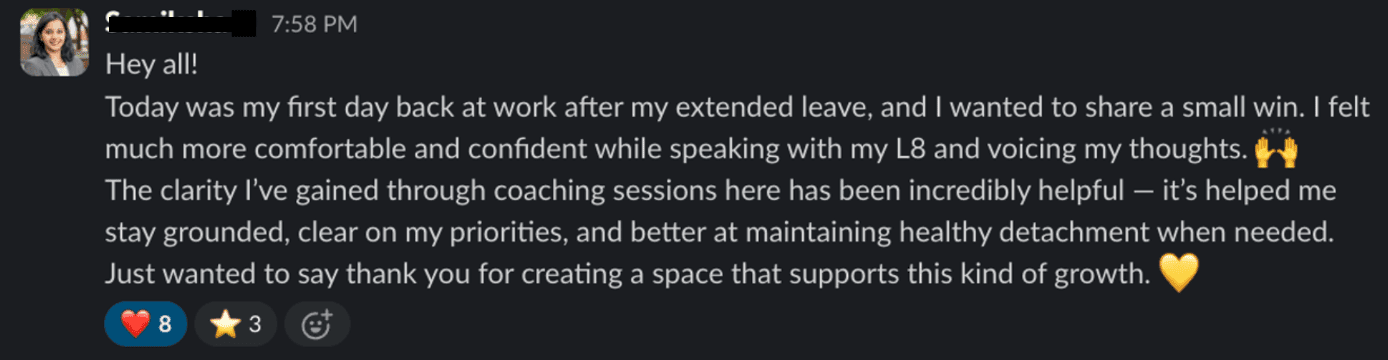
This is a key focus in the role-play coaching I do with my clients so they get the gift of going second. We practice together in a safe space so they show up confidently in the moments that matter most. For example, this client stopped waiting for permission, took ownership of the conversations with her leaders and got the recognition she deserved at Amazon.
3. Turn pushback into partnership
When someone says "no", your instinct might be to retreat or get defensive.
Strategic leaders do neither because they know it could negatively impact others' perceptions of them.
Instead, they get curious. One "no" is rarely a permanent rejection but usually just a sign that a leader has a concern you haven't addressed yet. Here's a few examples to address it head on.
Ask, don't argue: Instead of pushing back immediately, assuming you know why they're resistant, ask open-ended questions to uncover the root concern and build from there.
"I appreciate that perspective. What would need to change for this to become a 'yes' in your view?"
"Thank you for sharing that with me. I sense this hesitation is coming from [X] and I've actually already factored that into my decision-making. Knowing that, are there any other concerns that would make this a 'no' for you?"
Bring the missing link: Revisit the conversation when you have fresh data or a new success story to share. This shows you listened actively the first time and now have a more informed business case.
"Since our last talk, I’ve gathered a few new insights that address the [resource/timing] concerns we discussed last month. Would you be opposed to a 10 min touchpoint to see if this shifts your decision? I'm confident in the direction we're headed and would love your support."
Leverage cross-functional wins: If leadership isn’t convinced, show them how other departments are already winning with a similar approach. Then, tie it back to how this can work for you/your team.
"I’ve been tracking how the operations team implemented this framework. They’ve already seen a 12% boost in efficiency, and I believe we can mirror those results here to hit our Q2 targets. Here's the plan I propose..."
This approach works because you aren’t bossing anyone around. You’re helping them solve a business problem or opportunity. By connecting it back to their goals, you make it easy for them to say yes.
You've got this!
[Check out my recent video on How women with executive presence get promoted faster]
Free Peak Performers newsletter
Practical career tips that actually work.
Every Monday and Friday, get easy-to-use strategies and scripts to land better roles, faster promotions and more growth (and look great in front of your boss).
100% free • unsubscribe anytime.