Latest
How to set achievable goals (and actually hit them)
Peak Performers newsletter

Tiffany Uman
·
Jan 5, 2026
If you’ve ever entered a new year with high ambitions only to find yourself buried under the same unglamorous workhorse tasks 3 months later, you aren't alone.
You tell yourself "this year will be different," but then the daily grind takes over. You keep your head down, deliver exceptional results, and wait for someone to notice, unknowingly falling into the trap where being too good at your job actually blocks your promotion.
The high-achieving women I coach don’t struggle with ambition. They struggle with making their daily actions match the high-level leader they're meant to be.
So if your current goals feel safe or purely tactical, you're likely playing checkers in a chess game.
I always say that goals without action are simply ideas.
The biggest risk you can take is staying too close to your comfort zone. If your goals don't scare you at least a little, you aren't pushing yourself toward your fullest potential, and we can't have that!
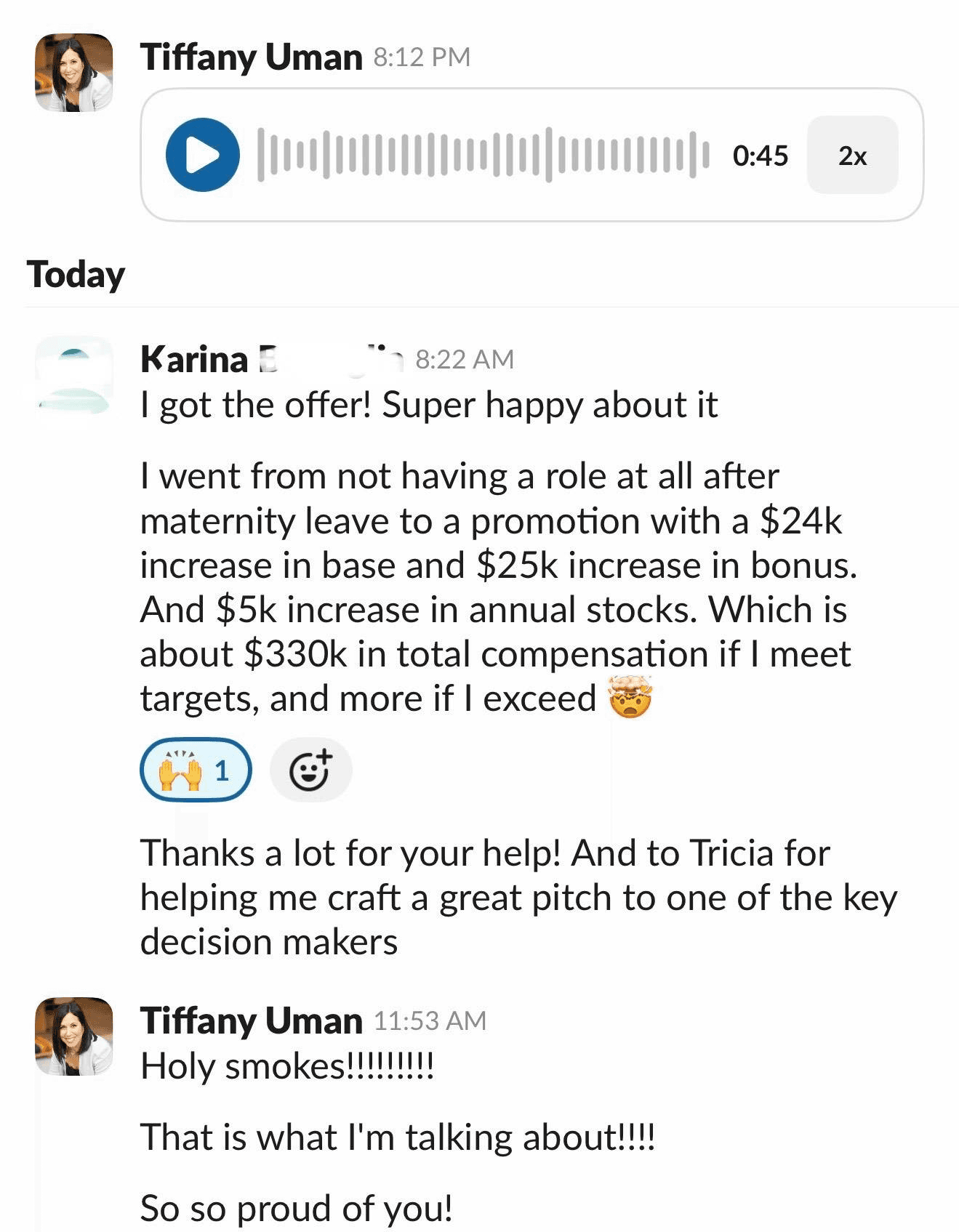
Peak performers recognize that goals must be paired with measurable action steps to move from "dreamer" to "action taker". Take my client Karina, for example. By shifting from hope to an intentional networking plan, which reinforced her allies and visibility, and practicing her executive communication and interviewing skills together, she secured her $330K senior promotion at Microsoft in a few short weeks.
3 strategies to set goals that command respect
1. Reverse engineer your next big move
Instead of starting with your current to-do list, which only keeps you stuck on the tactics, look 6 months into the future. Envision yourself already there.
To make this very actionable, work backward using my reflection prompts below to remove the blind spots of short-term thinking:
→ Target skills: What executive communication patterns do you want to have mastered? For example, ask yourself, "When looking back, what high-stakes conversations do I want to say I handled with confidence? Is it articulating my value in 1:1s or building more influence with senior leaders?"
→ Desired identity: How do you want to be described in rooms you aren't in? For example, "How do I want my leaders and peers to feel after interacting with me? Am I shifting from "the reliable doer" to the "strategic partner" whose opinion shapes company strategy?"
→ Target experiences: What specific exposure do you need? For example, "What new experiences or projects do I want more exposure to by the end of this year? Can I get this in my current company or do I need to make a move elsewhere?" If you want a Director or VP title, what skill gaps are missing today to close that promotion in weeks, not years?
→ Desired support: What support am I currently missing to get there? What do I need to do differently since my past strategies haven't gotten me there yet? For example, "Do I need a sponsor in senior leadership, should I nurture my network better, or would working with a career coach help me save time and reach my next-level faster?"
From here, start by naming the specific title you want and the measurable evidence that prove you're already operating at that level. For example, if you're targeting Director of Operations, you may include:
Led a cross-departmental initiative that optimized the supply chain workflow, reducing turnaround time by 18% and saving the company $200K annually.
Developed a monthly strategic insight report adopted by senior leadership to inform upcoming revenue targets.
Built an advocacy network of 3 C-suite sponsors by providing high-level data summaries that simplified their decision-making process.
[Check out my free LinkedIn Learning nano-course on How to Fast-Track Your Career]
2. Apply the "work smarter" rule
Setting a goal is only the first step. The true magic lies in the purposeful action that follows.
Whether you tend to overthink or worry about making the wrong decision, perfectionism is often a subtle form of self-sabotage that cripples your ability to move forward.
I recommend starting with your yearly goals and break them down into quarterly milestones, monthly goals and then daily micro-goals. This way, you're consistently moving towards your targets in a digestible way.
To ensure your goals materialize into tangible results, integrate my simple action steps.
→ Break goals into bite-sized steps: Take large, intimidating objectives, like landing a VP role, and split them into small daily steps. Completing even a single 10-minute window of professional development creates momentum and builds the self-worth needed for your next level.
→ Set 3 daily priorities: Identify the most critical tasks that move you closer to your ultimate goal. My golden rule is to pick 3 priorities per day to ensure your energy is focused on leveraged, value-added impact, rather than non-productive busy work. For example:
Instead of spending hours answering emails or updating a tactical project tracker, draft a high-level summary of a recent project win that connects your results to the company’s goals. This ensures you're sharing insights that matter to leadership rather than just providing data.
Instead of volunteering to take notes in a cross-functional meeting, prepare 2 proactive questions for that same meeting that move a key decision forward. This positions you as a strategic thinker who is already operating at the next level.
Instead of staying late to finish a report just to be perfect, schedule a 15-minute strategic update call with a senior leader to share a lesson learned from your project. This elevates your leadership and builds advocates with key decision-makers.
→ Audit your feedback to silence doubt: Don't let other people’s limitations become your ceiling. Often, feedback like "you need more executive presence" or "you need to be more strategic" is a vague deflection because leadership can't imagine replacing you in your current role. So instead, turn the concern into a strategic conversation.
"I appreciate you sharing that with me. From your perspective, what specific leadership traits/skills would I need to demonstrate over the next 60 days to be the obvious choice for this promotion? I'd love to map out a plan together."
[Check out my recent newsletter on How women get overlooked as leadership-ready]
3. Re-assess your goals and pivot with agility
Being agile in your goal-setting is a critical part of the process that's often overlooked. Your goal doesn't necessarily need to change but the path to get there may require some key shifts.
This isn't about questioning your commitment or ambition. Rather, it helps prevent you from becoming so invaluable in your role that moving you into a higher-level position stalls.
→ Set regular review intervals: Schedule reviews, monthly or quarterly, to reflect on your progress. Use this time to step out of the weeds of execution and look at your trajectory objectively with your boss.
→ Evaluate obstacles and patterns objectively: During each review, ask yourself "Is my current approach working, or am I just repeating the same pattern that hasn't moved the needle for me?" Also, play devil’s advocate with yourself to identify if you're performing non-value-added work that doesn't tangibly contribute to your development. Here's a quick script you can use for this with your boss:
"I’ve realized I’ve fallen into some old habits by focusing heavily on execution. While I’m proud of my results, I want to ensure my energy is directed toward leveraged work that supports [X goal] we aligned on together.
I propose delegating [tactical task(s)] so I can take ownership of [strategic initiative]. This shift allows me to better demonstrate my leadership in [X, Y, Z areas] for our next phase of growth in the division. From your perspective, how can we refine my workflow to ensure I’m acting as the strategic partner on our biggest targets?"
→ Adjust and update based on data: Be prepared to modify your goals, change your timelines, or even set new goals in response to new information or opportunities. Agility is a sign of leadership readiness and is required the more senior you get. It also proves you can recover from setbacks, learn from feedback, and maintain momentum despite changing circumstances.
So, this week, look at your primary goal this year. If you haven't seen a measurable shift in your visibility or authority in the last 90 days, your current strategy is likely keeping you stuck.
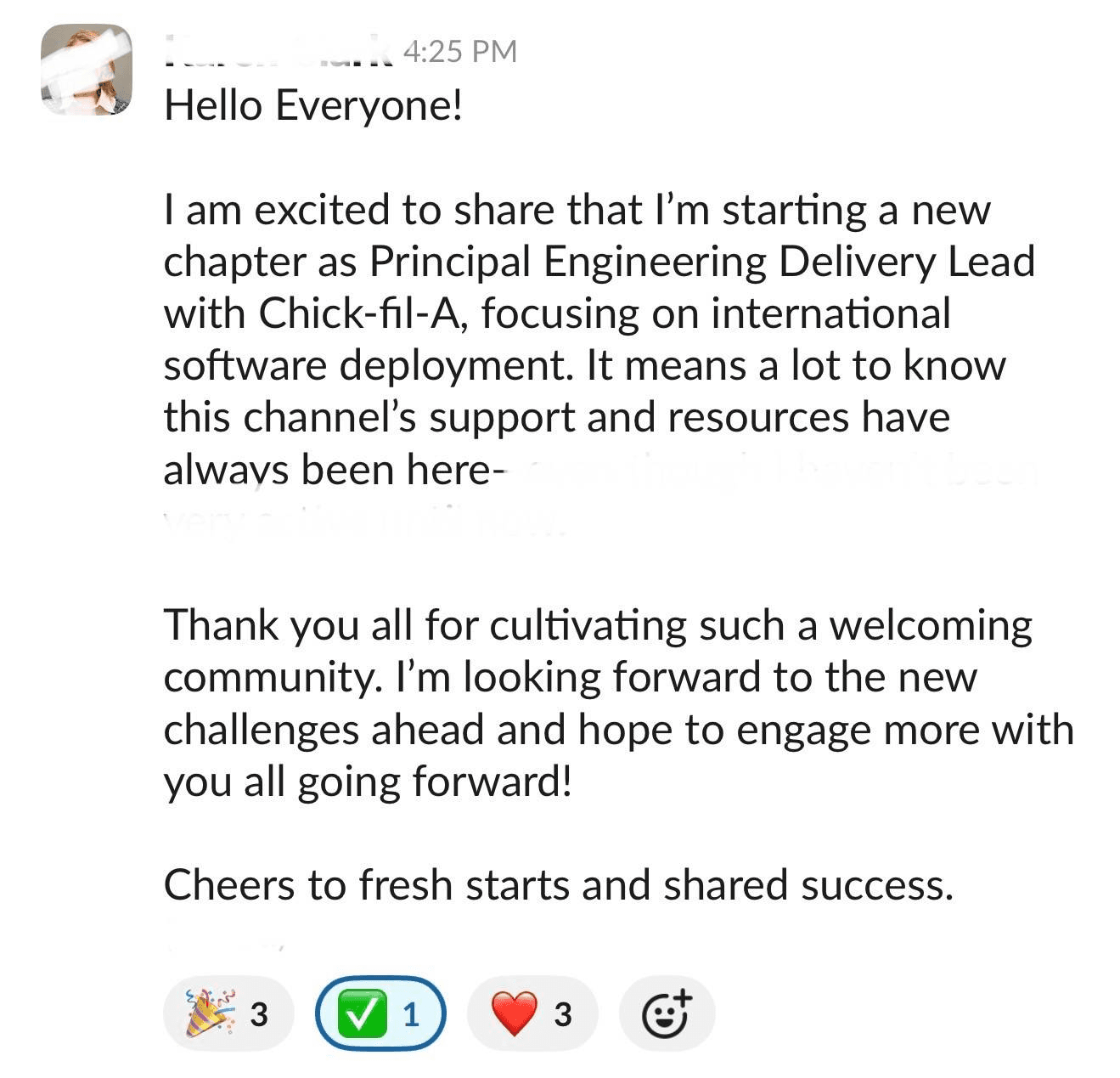
This is what I helped my client Karen with. She no longer wanted to grow in her company due to the toxic behaviors of the leadership team and feeling stalled. Instead, we doubled down on her external networking strategy, interview practice, role-plays and negotiation. This led her to secure her dream position at a new company where we're now building out her first 90 day success plan.
You've got this!
Free Peak Performers newsletter
Practical career tips that actually work.
Every Monday and Friday, get easy-to-use strategies and scripts to land better roles, faster promotions and more growth (and look great in front of your boss).
100% free • unsubscribe anytime.